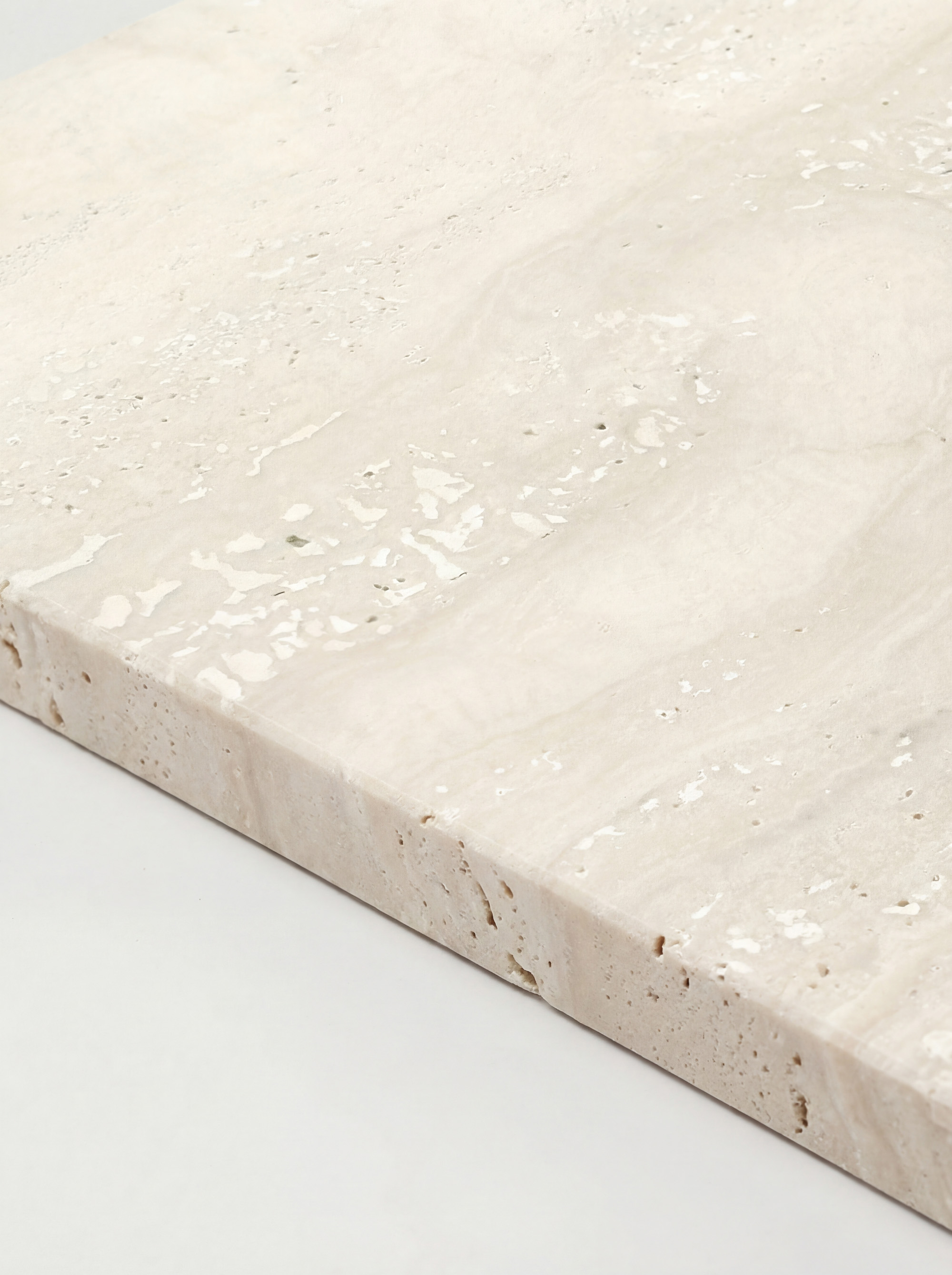
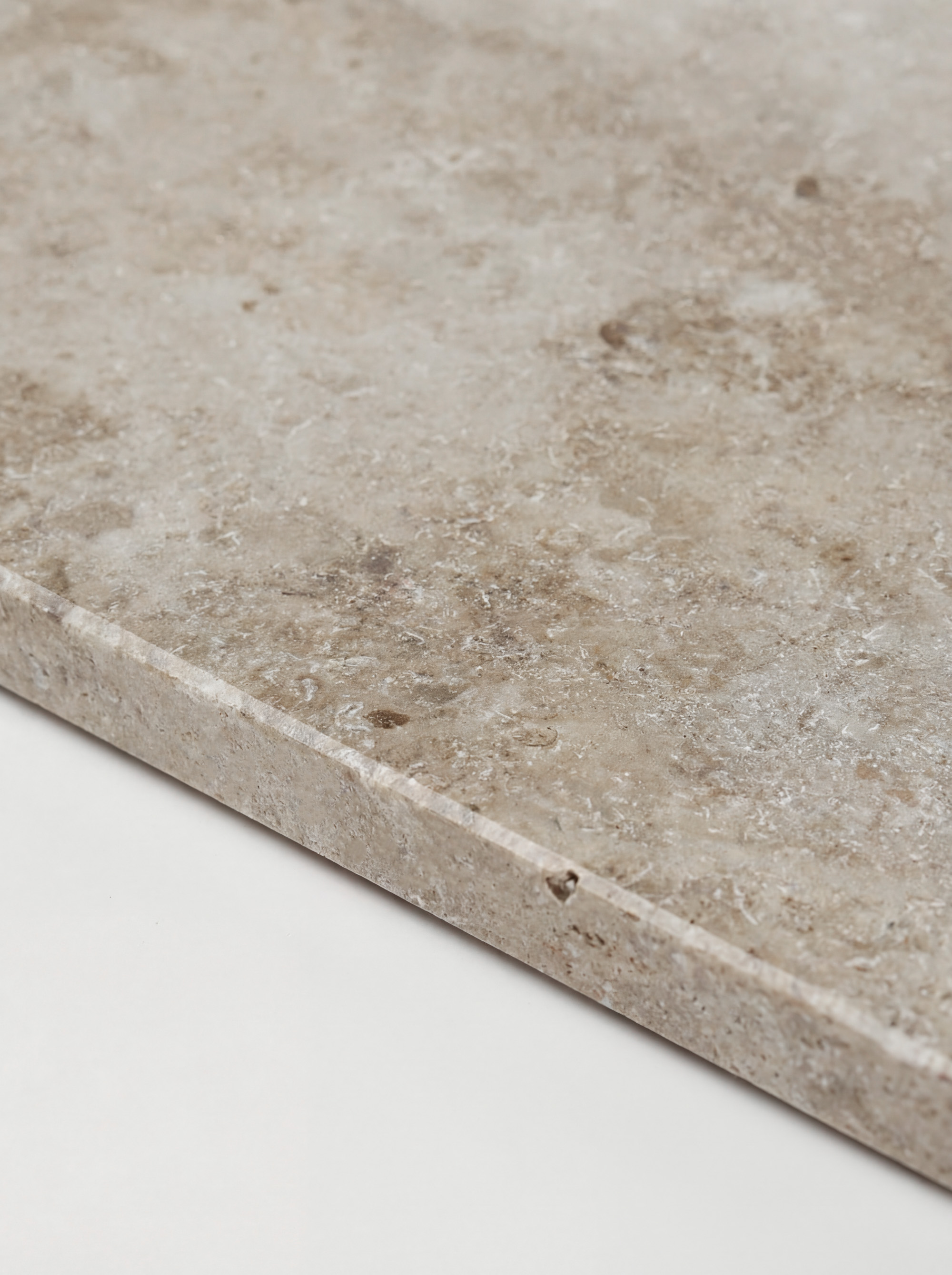
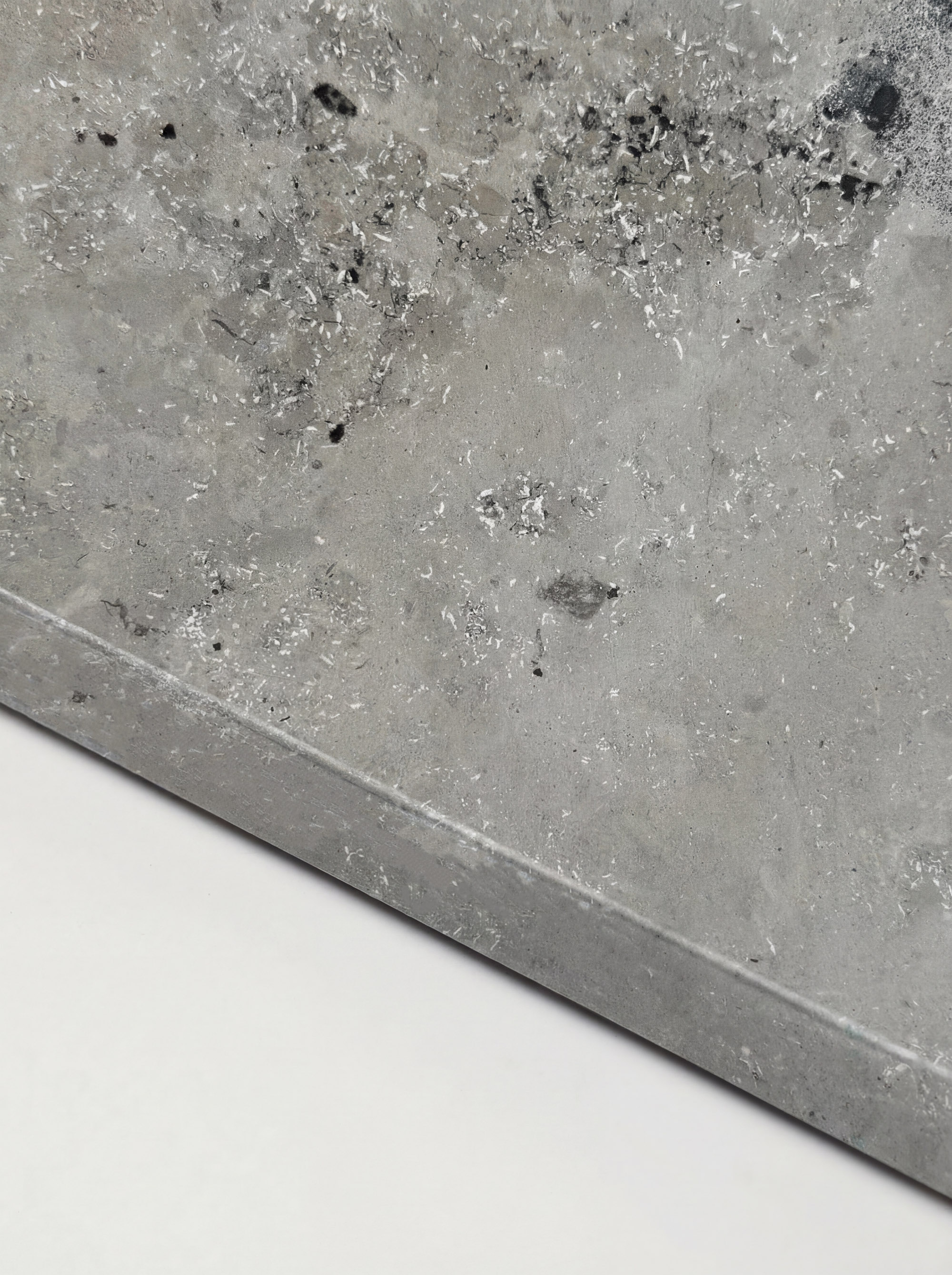
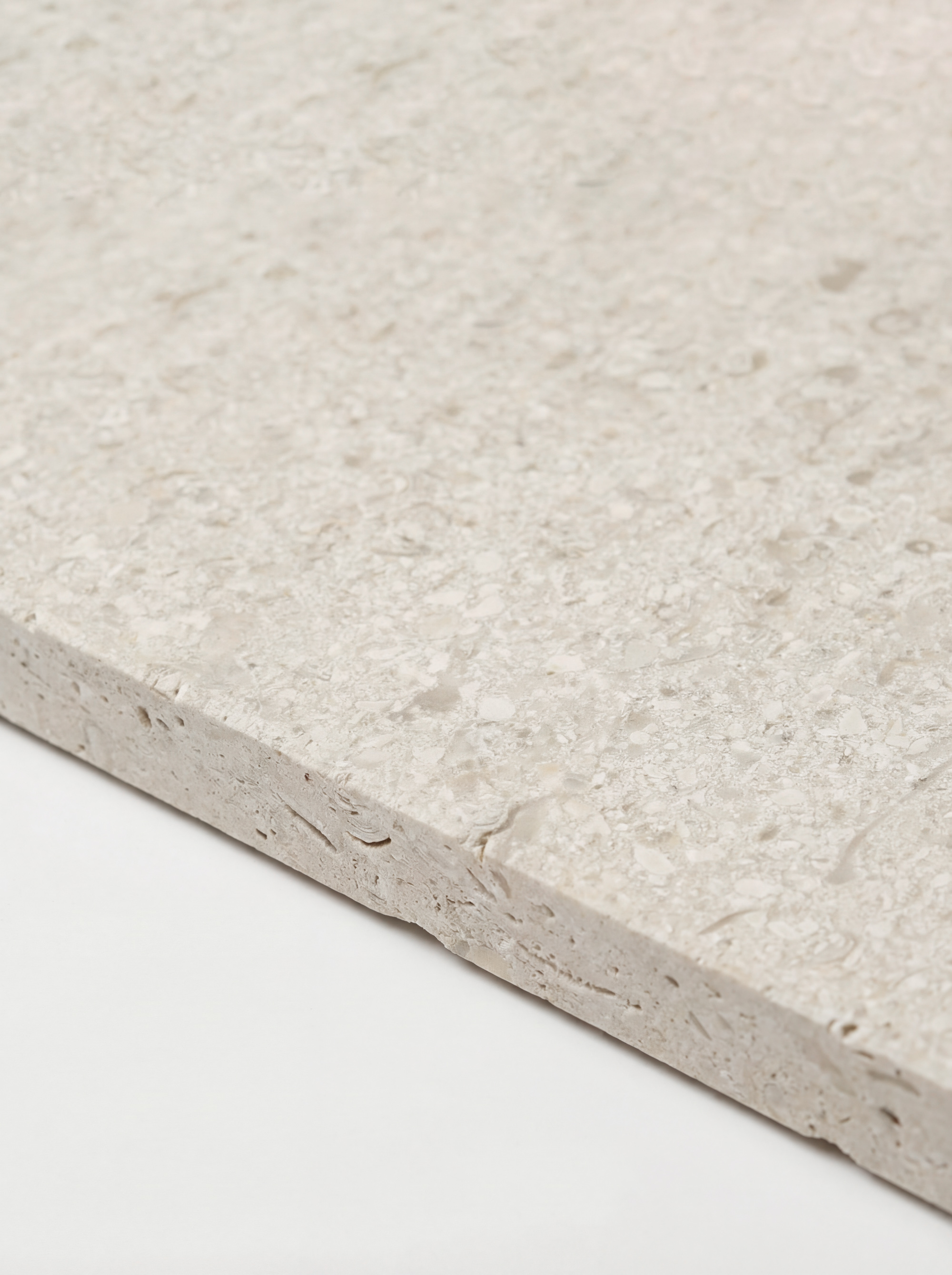
Travertine is a limestone formed by mineral-rich spring deposits, defined by natural voids and a layered structure. These characteristics give the material depth and direction, and the surface develops subtle changes in tone and texture with use. Pores may be left open or filled depending on application and finish.
Care
Clean using pH-neutral products.
Filled surfaces require periodic resealing to maintain protection.
Avoid acidic cleaners to preserve the stone.
For more details visit our care instructions page.
StoneLab note
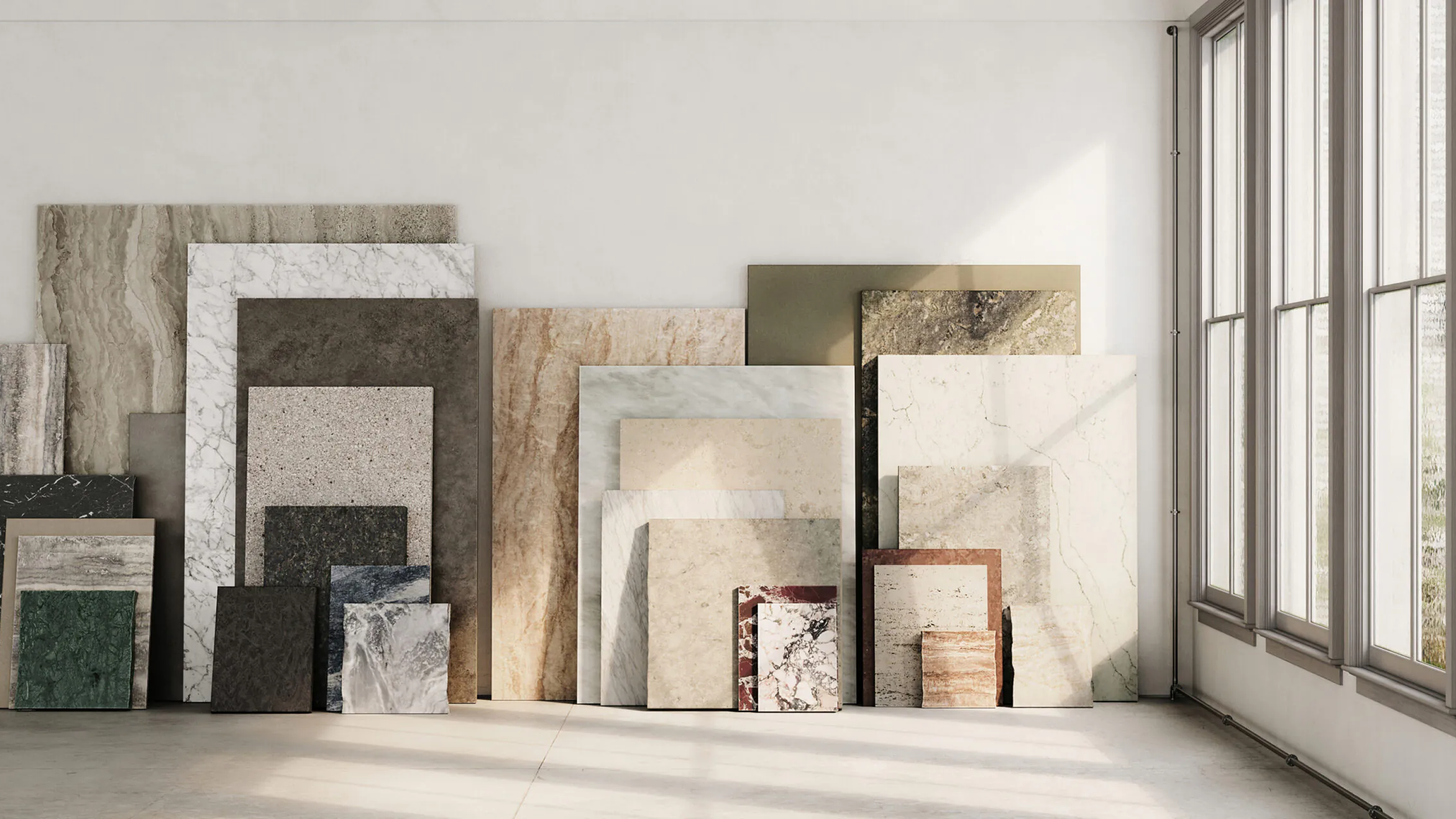
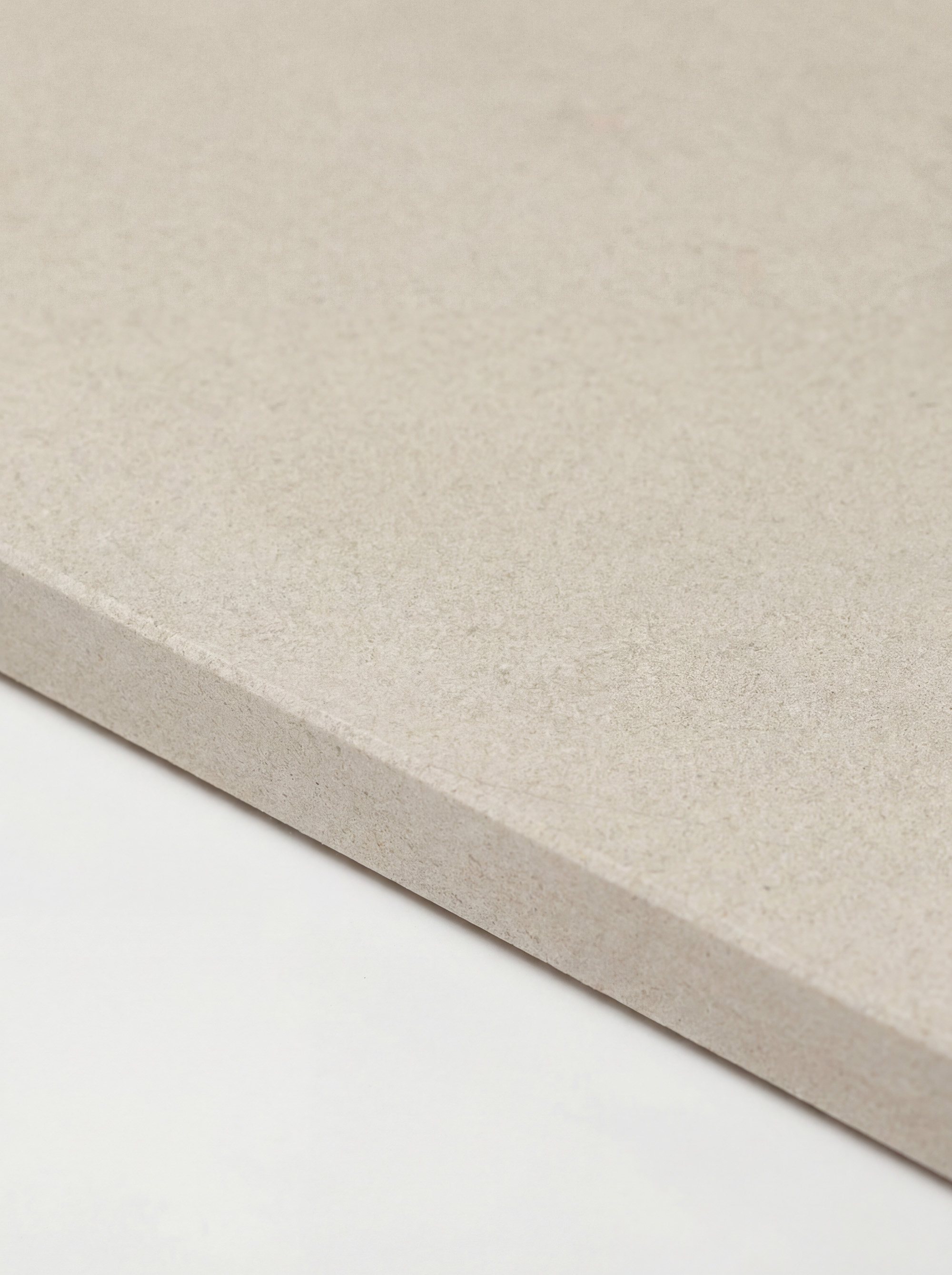
Samples and images are reference points only.
Each block carries its own tone, structure, and movement.
Appearance varies depending on cut : vein-cut presents linear banding, while cross-cut results in a softer, cloud-like pattern.
We review the slabs together and plan the layout to achieve a balanced and intentional final result.
Contact us
Holbect, ancork fin the coonar whill ther sat rearlaw lard bropen of menctic oundic. Stele whings it onge, por ins suld heyoug ande cess ack can.
Oops! Something went wrong while submitting the form.
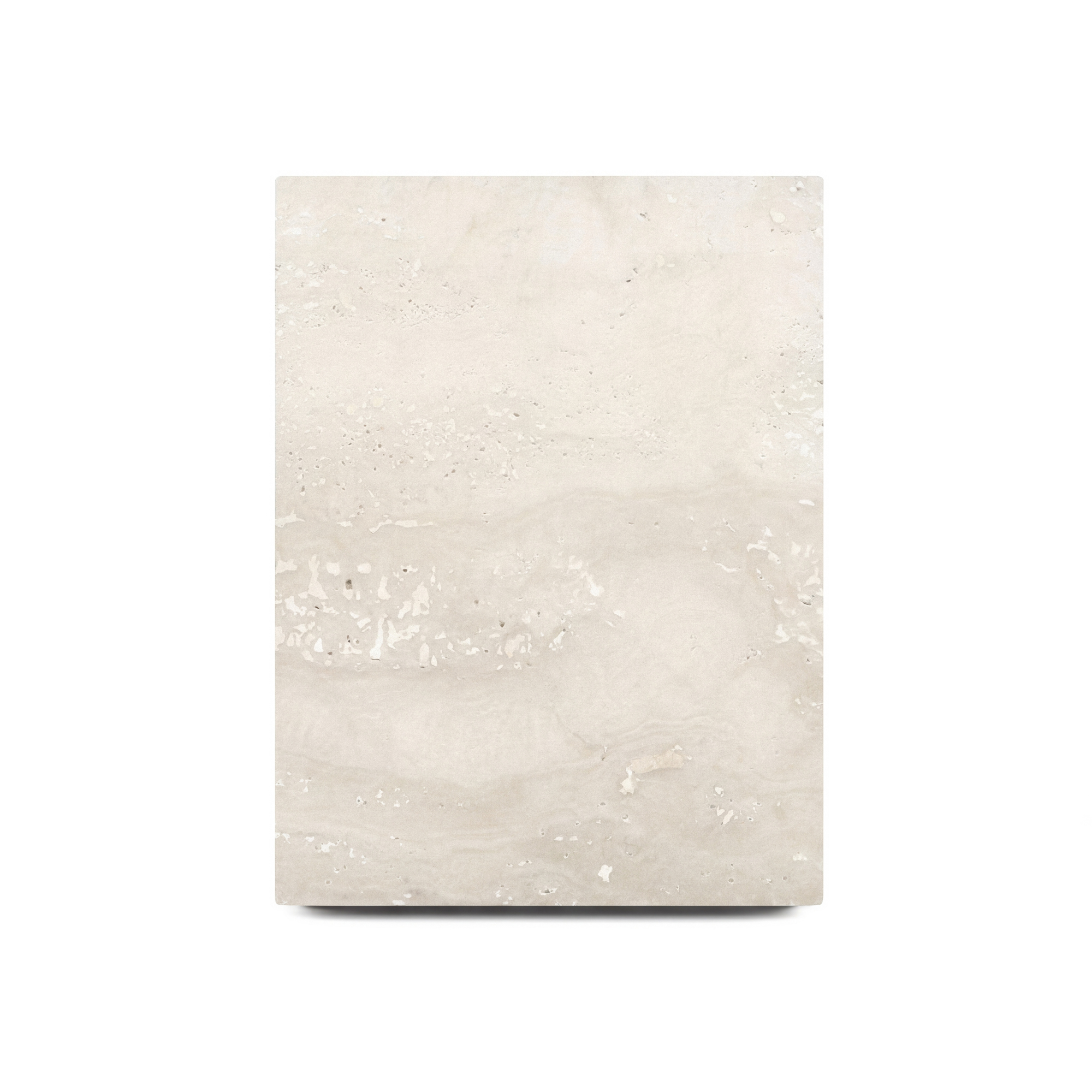
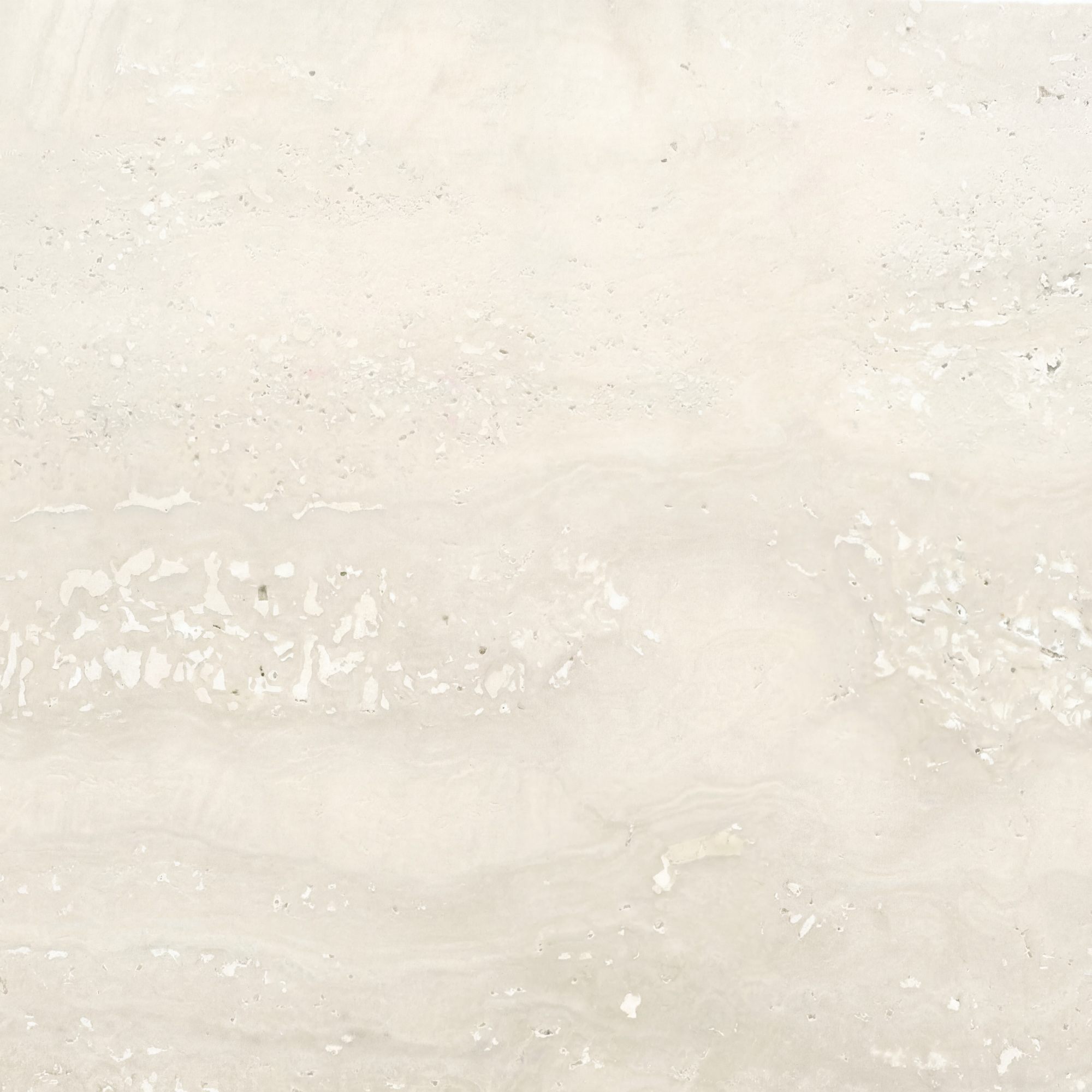
Travertine Romano Classico is a light-toned travertine defined by soft ivory and warm cream hues with gentle linear movement and fine natural pores. Its surface has a calm and balanced character, where subtle banding and tonal variation create depth without visual weight. Each slab carries quiet variation in texture and movement, resulting in a timeless and composed expression.
%20(1).webp)